How many patient calls is your practice missing?
Most dental practices miss 30-40% of inbound calls. See how AI reception can capture every call 24/7.
In today's fast-paced world, patient reminder fatigue is a real challenge for dental clinics. Patients are bombarded with notifications from various services, leading to desensitization and potential disengagement. This can result in missed appointments, no-shows, and a decline in patient satisfaction.
Understanding Patient Reminder Fatigue
Patient reminder fatigue arises when patients receive too many notifications, causing them to ignore or overlook important messages. In the dental sector, this can lead to missed appointments and increased administrative workload. To mitigate this fatigue, it's vital to focus on two key strategies: personalization and frequency control.
The Power of Personalization
- Tailored Messages: Personalized reminders resonate more with patients. By using data-driven insights from platforms like TensorLinks, clinics can customize messages based on patient preferences and history.
- Targeted Content: Instead of generic notifications, include specific information relevant to the patient's upcoming appointment or past treatments, adding a personal touch.
Optimizing Reminder Frequency
- Balance is Key: Finding the right frequency for reminders is crucial. Sending too many can lead to annoyance, while too few might result in forgetfulness.
- Adaptive Systems: A smart system can adjust the frequency based on patient behavior—if a patient regularly confirms appointments after the first reminder, reduce the number of follow-ups accordingly.
Enhancing Patient Communication
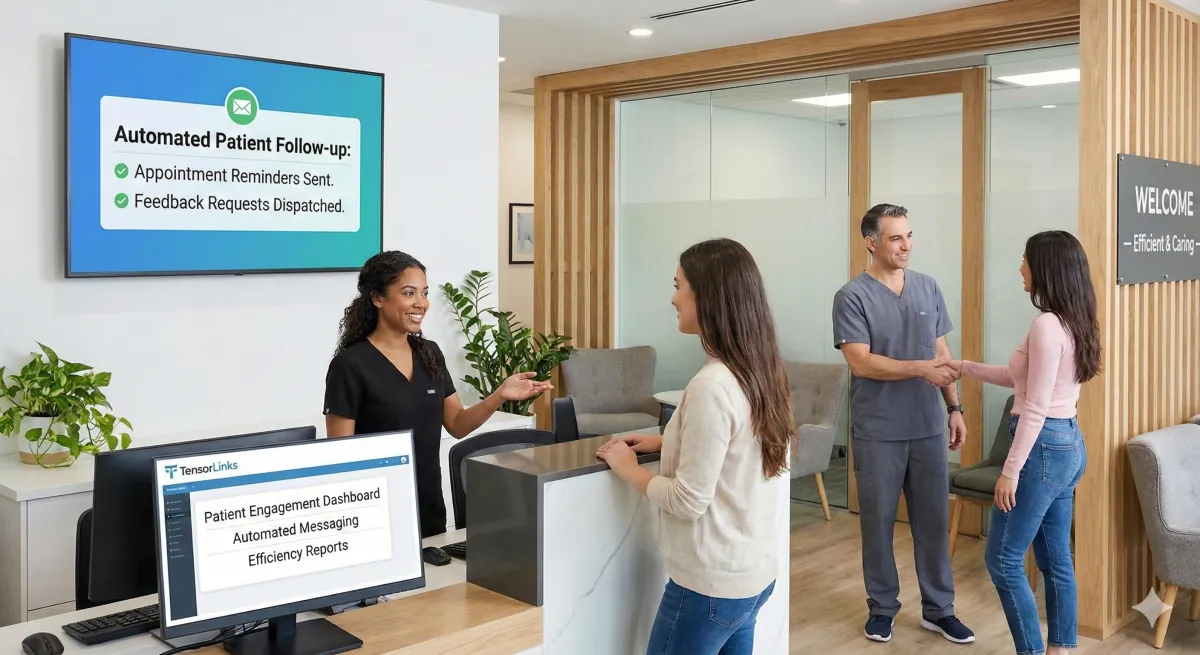
Implementing an effective reminder system also involves streamlined communication channels. Here's how TensorLinks can help:
- Unified Platform: Centralize all communication, ensuring patients receive messages through their preferred channel, be it email, SMS, or phone call.
- Real-Time Analytics: Monitor engagement rates and adjust strategies in real-time to optimize communication efforts.
Example: Reducing No-Shows
Consider a dental clinic struggling with high no-show rates. By integrating TensorLinks, the clinic personalizes their reminders, adjusting frequency based on each patient's response patterns. This results in a noticeable decrease in no-shows and an improvement in patient satisfaction.
Tags: Patient reminders, no-shows, appointment scheduling, patient engagement, personalization, dental automation
The Science Behind Reminder Fatigue — And What the Data Shows
Research from the Journal of Medical Internet Research indicates that patients who receive more than three reminders per appointment begin actively ignoring all communications from that provider. The phenomenon is well-documented: after a certain threshold, each additional message actually decreases the likelihood of engagement. For dental practices sending blanket reminders across email, SMS, and phone, this creates a paradox where more effort yields worse results. The solution is not fewer reminders, but smarter ones. Practices using AI-driven communication platforms report that switching from a fixed reminder cadence to a behavior-responsive model reduces no-show rates by 25-40%, because the system learns which patients need one nudge and which need two, and through which channel.
Omnichannel Delivery: Reaching Patients Where They Actually Are
One of the biggest mistakes practices make is assuming every patient prefers the same communication channel. Studies show that patients under 35 overwhelmingly prefer text messages, while patients over 55 are more likely to respond to phone calls. A truly effective reminder system must operate across voice, SMS, and web chat simultaneously, adapting to each patient's demonstrated preferences. TensorLinks provides omnichannel communication from a single platform, automatically routing reminders through the channel each patient is most likely to engage with. The system also supports 24+ languages, ensuring that non-English-speaking patients receive reminders they can actually understand and act on — a critical factor in diverse communities where language barriers contribute significantly to no-show rates.
Turning Reminders into Revenue: The PMS Integration Advantage
Effective reminder systems do not operate in isolation. When reminders are disconnected from your practice management software, staff must manually reconcile confirmations, cancellations, and reschedules — adding more work rather than reducing it. TensorLinks integrates directly with Dentrix, EagleSoft, Open Dental, and Curve, so when a patient confirms via text or voice, the appointment status updates automatically in your PMS. Cancellations trigger immediate outreach to patients on your waitlist, filling gaps that would otherwise represent lost production. Practices using integrated reminder systems recover an average of 8-12 previously lost appointments per month, translating to thousands of dollars in recaptured revenue without any additional staff effort. For patients who are overdue for their next visit, TensorLinks also offers dedicated AI patient recall campaigns that pair seamlessly with the reminder system to recapture lapsed patients before they seek care elsewhere.
Frequently Asked Questions
How many reminders should a dental practice send per appointment?
Most data suggests two well-timed reminders are optimal for the majority of patients: one 48-72 hours before the appointment and a same-day confirmation. TensorLinks' AI automatically adjusts this cadence based on each patient's historical response patterns, so reliable patients get fewer touches and chronic no-shows receive appropriately timed follow-ups.
Can AI reminders handle patients who speak different languages?
Yes. TensorLinks supports over 24 languages across voice, SMS, and web chat channels. The system detects the patient's preferred language from their profile or prior interactions and delivers reminders accordingly, eliminating the language barrier that contributes to missed appointments in multilingual communities.
What happens when a patient confirms or cancels through an automated reminder?
When a patient responds to a TensorLinks reminder, the confirmation or cancellation is written directly back to your PMS — Dentrix, EagleSoft, Open Dental, or Curve — in real time. Cancellations automatically trigger waitlist outreach to fill the open slot, so your schedule stays full without manual intervention from your front desk team.
See How AI Can Work for Your Practice
TensorLinks' AI receptionist answers every call 24/7, books directly into your PMS (Dentrix, EagleSoft, Open Dental, Curve), handles texts and web chats, and runs automated recall campaigns — all from one platform.