
How many patient calls is your practice missing?
Most dental practices miss 30-40% of inbound calls. See how AI reception can capture every call 24/7.
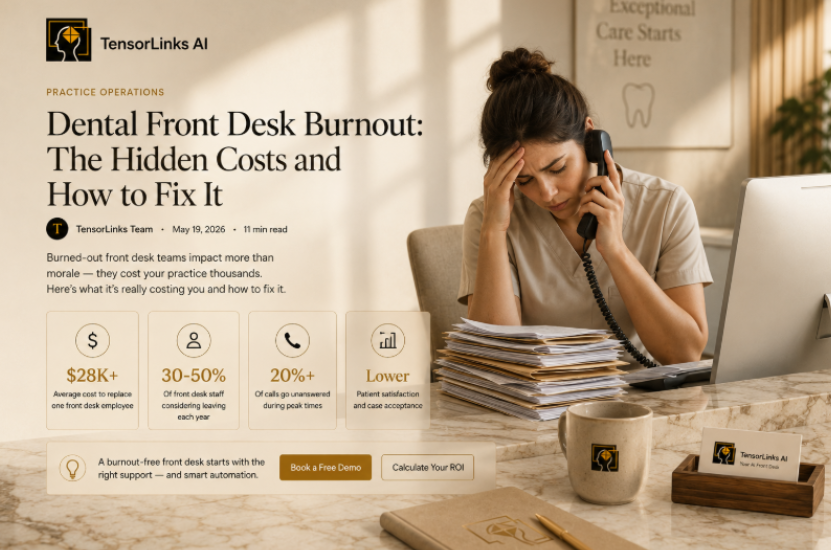
Dental front desk burnout is the chronic stress and exhaustion that builds when one or two people absorb every ringing phone, every check-in, and every insurance question at the same time. In 2026 it is more expensive than most owners realize: it drives staff turnover, scheduling mistakes, and missed calls that quietly leak revenue. The fix is not hiring more people — it is removing the repetitive call and scheduling load from the desk so your team can focus on the patients in front of them. This guide breaks down what burnout actually costs a dental practice and how to fix it.
What is dental front desk burnout?
Dental front desk burnout is a state of chronic physical and emotional exhaustion caused by sustained, high-volume administrative pressure at a practice's front office. It is not simply "a busy day." It is the cumulative effect of answering back-to-back calls, checking in patients, chasing insurance details, rescheduling cancellations, and fielding billing questions — usually with one or two people and no buffer.
The front desk is the heart of a dental practice's daily operations, and that is exactly why it burns out first. When one person is the single point of contact for the phone, the lobby, and the schedule, every task competes for the same attention at the same moment. Burnout is the predictable result — not a sign of a weak employee.
What are the warning signs of front desk burnout?
Front desk burnout usually shows up in operational symptoms before anyone says the word "burnout." Watch for these signs at your practice:
- Rising voicemail counts — more calls going unanswered, especially at peak hours.
- Slipping recall — overdue-patient lists growing because no one has time to work them.
- More scheduling mistakes — double-bookings, wrong-day appointments, and reminders that never sent.
- Shorter tempers and longer check-in lines — patients waiting while the desk juggles the phone.
- Turnover talk — your most experienced coordinator hinting they are tired, or already gone.
Any one of these in isolation is a bad week. Several of them together is a front desk that is structurally overloaded — and it will not fix itself.
What does front desk burnout actually cost your practice?
Front desk burnout costs a dental practice in three measurable ways: staff turnover, missed-call revenue loss, and scheduling errors. Each one carries a dollar figure.
Staff turnover
Burnout is one of the leading reasons front office staff quit, and replacing them is expensive. Research from the Society for Human Resource Management (SHRM) estimates the cost of replacing an employee at roughly one-half to two times their annual salary once recruiting, onboarding, and lost productivity are counted. For a front desk coordinator earning $42,000, that is approximately $21,000 to $84,000 every time the seat turns over — before accounting for the patients who lose a familiar voice.
Missed calls and lost revenue
An overwhelmed front desk cannot answer every call. Industry estimates put the share of inbound calls a typical dental practice misses at 30% or more, and a meaningful portion of those callers are new patients or people trying to book treatment. A missed new-patient call is not a small loss — the lifetime value of a single dental patient runs into the thousands of dollars. Callers who reach voicemail often do not leave a message; many simply call the next practice on the list.
Scheduling errors and patient dissatisfaction
Stress and constant multitasking cause mistakes: double-booked operatories, appointments entered on the wrong day, reminders that never go out. Each error ripples — a no-show from a missed reminder is an empty chair, and a double-booking is a frustrated patient in the waiting room. Over time these erode both the patient experience and the practice's reputation.
Why hiring more front desk staff doesn't fix it
Hiring another front desk person rarely solves burnout, because the problem is the volume and timing of the work, not just the headcount. Calls arrive in clusters — first thing in the morning, right after lunch, at end of day — and they arrive during evenings and weekends when no one is at the desk at all. Adding a person spreads the daytime load but does nothing for after-hours demand, and it adds payroll, benefits, and another seat to train and eventually re-hire when that person burns out too.
The durable fix is to reduce the repetitive workload itself — to take the routine, interruptive tasks off the desk so the people there can do the work that genuinely needs a human. For a fuller view of the operational traps practices fall into, see our guide to common operational challenges in dental practices.
How does AI take the repetitive load off the front desk?
An AI front desk handles the high-volume, repetitive tasks — answering calls, booking appointments, sending reminders, running recall campaigns — automatically, so human staff are interrupted only when a situation actually needs them. It does not replace the front desk team; it removes the work that causes burnout.
A TensorLinks AI receptionist covers the load that overwhelms a human desk:
- Answers every call, 24/7 — inbound calls are answered immediately, including evenings, weekends, and holidays, so no new patient hits voicemail.
- Books appointments directly into your PMS — the AI checks provider and operatory availability and writes the appointment into Dentrix, Dentrix Ascend, EagleSoft, Open Dental, or CareStack in real time.
- Runs recall and reactivation campaigns — automated outbound calls and texts re-engage overdue patients and fill the schedule, without a staff member working a call list by hand.
- Handles voice, text, and web chat — patients reach the practice on the channel they prefer, and the AI manages all three.
- Escalates to staff only when needed — complex or sensitive situations route to a human with context, instead of every call landing on the desk.
The effect on the front desk is direct: the phone stops being a constant interruption. Staff move from reacting to whatever rings to working through their day with focus.
What does a less-stressed front desk look like?
When the repetitive call and scheduling load is automated, the front desk changes shape. Mornings no longer start with a backlog of voicemails. The person at the desk can greet the patient in front of them without the phone pulling them away mid-sentence. Recall runs in the background instead of being the task that never gets done. Fewer scheduling errors mean fewer awkward conversations and fewer empty chairs.
The staffing math changes too. A practice that was about to hire a second coordinator just to survive the call volume often does not need to — and the coordinator it already has is far less likely to quit. Before adding payroll, it is worth comparing the numbers; our breakdown of AI dental receptionist cost in 2026 shows how the two options compare.
How to start reducing front desk burnout
You can begin addressing front desk burnout with a few concrete steps:
- Measure your missed calls. Ask your phone system or PMS how many inbound calls went unanswered last month. The number is usually higher than the team expects.
- Identify the repetitive tasks. List what the front desk does over and over — booking, reminders, recall calls, routine questions. These are your automation candidates.
- Cover after-hours first. Evening and weekend calls are pure missed opportunity today; an AI front desk captures them with no added payroll.
- Automate, then reassign. Once routine calls and scheduling are handled by AI, redirect your team to patient-facing work — treatment coordination, in-person experience, and follow-up.
Frequently Asked Questions
What causes dental front desk burnout?
It is caused by sustained, high-volume administrative pressure — answering constant calls, checking in patients, handling insurance and billing questions, and managing the schedule, often with one or two people and no buffer. The interruptive nature of the work, where every task competes for attention at once, is the core driver.
How much does front desk turnover cost a dental practice?
SHRM research estimates that replacing an employee costs roughly one-half to two times their annual salary. For a front desk coordinator earning around $42,000, that is approximately $21,000 to $84,000 per departure once recruiting, onboarding, and lost productivity are included.
Will an AI receptionist replace my front desk staff?
No. An AI receptionist removes the repetitive, high-volume tasks — answering routine calls, booking, reminders, and recall — so your existing staff can focus on patients in the practice. It handles overflow and after-hours demand and escalates anything complex to a human.
Can AI handle dental calls after hours and on weekends?
Yes. An AI front desk answers calls 24/7, including evenings, weekends, and holidays. This captures new-patient and scheduling calls that would otherwise reach voicemail when the practice is closed.
How quickly can a practice reduce front desk workload with AI?
Because an AI front desk integrates with existing practice management systems, most practices can have it answering calls and booking appointments within days, not months. After-hours and overflow calls are typically the first load it removes from the team.
See how much call volume TensorLinks AI FrontDesk can take off your team
Book a Demo →Tags: dental front desk burnout, dental front office staff turnover, dental receptionist burnout, AI front desk for dental practices, reduce dental staff turnover, dental practice staffing 2026
Related articles
More from Practice Operations on TensorLinks.

Why Most Dental Clinics Underutilize Their Phone System
Many dental clinics miss opportunities due to inefficient phone systems. Discover why missed calls, long holds, and voice automation are key areas to address for improved clinic operations.

AI Call Transcripts: A Compliance and Training Goldmine
Unlock the power of call transcripts to boost quality, enhance coaching, and ensure HIPAA compliance in your dental practice—with tools like TensorLinks.

Automating Patient Follow-Ups: Why It Matters for Your Dental Clinic
In the busy environment of a dental clinic, following up with patients can slip through the cracks. Discover how automated follow-ups can transform this challenge into a strategic advantage.

What Smart Clinics Know About Patient Reminder Fatigue
Are your patients tuning out? Discover how to personalize and optimize reminders to keep them engaged and satisfied.
Ready to stop missing patient calls?
TensorLinks AI answers every call 24/7, books appointments into your PMS, and speaks 24+ languages. Join hundreds of dental practices already using AI reception.