How many patient calls is your practice missing?
Most dental practices miss 30-40% of inbound calls. See how AI reception can capture every call 24/7.
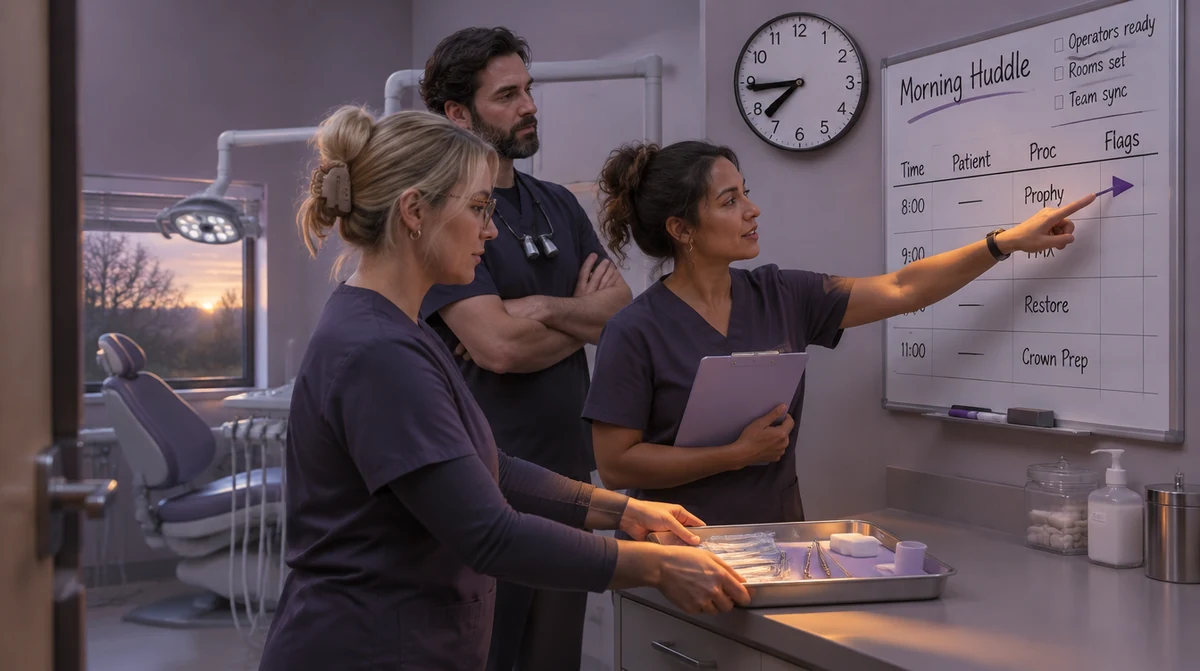
The most useful integration result I've seen has been morning huddle preparation. Bringing documented patient details forward — including premedication needs — can help the team prepare before the day gets busy. That's a practical reason for connecting AI to the practice management system.
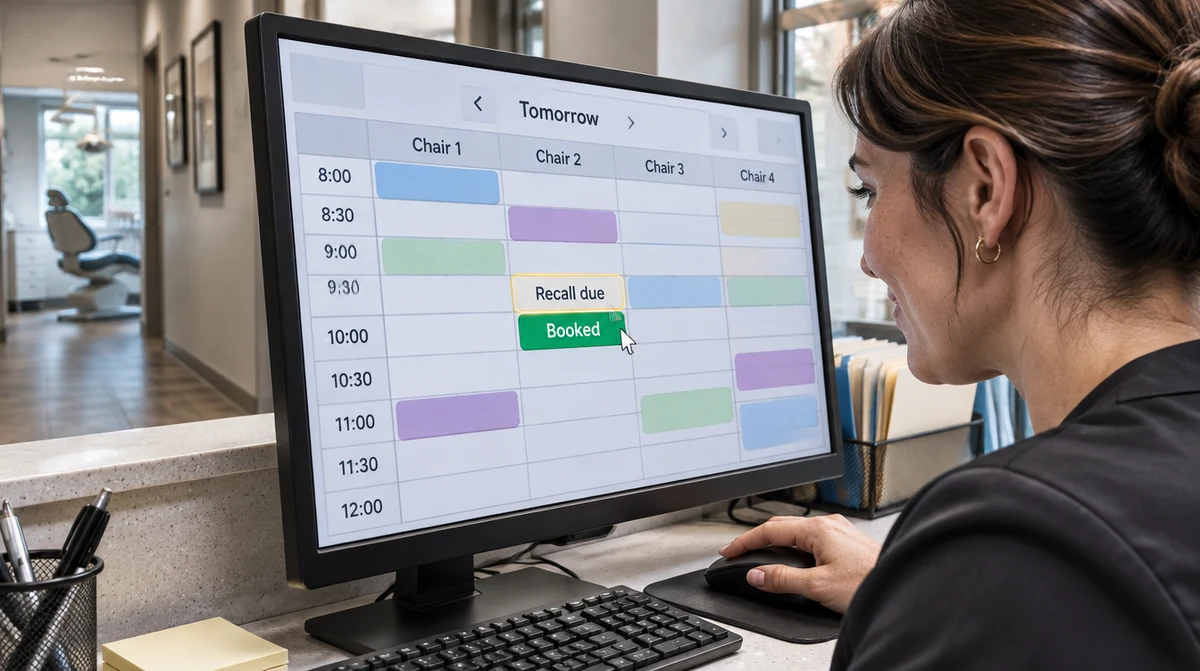
The PMS already holds the schedule, recall status, treatment plans, and completed procedures. But a recall list can sit untouched while the front desk handles calls, and a treatment plan can remain unscheduled because no one has time to follow up. A connection gives the AI access to the information needed to help with those jobs.
The PMS should remain the source of truth
An AI platform should not require the practice to recreate its schedule or maintain a second patient database manually. The PMS should remain the source of truth for appointments, provider availability, patient identity, and clinical-administrative status.
If the AI books an appointment or sends a follow-up, staff need to see what it did and verify the result in the PMS.
What integration can make possible
- Identify patients who are due or overdue for recall
- Find patients with diagnosed but unscheduled treatment
- Exclude patients who already have an appropriate appointment
- Match appointment type, provider, location, duration, and operatory
- Surface documented appointment preparation such as premedication or appliance reminders
- Respect treatment sequence before offering an appointment
- Offer current availability instead of a generic callback
- Write a confirmed appointment back to the schedule
- Recognize completed procedures before sending follow-up messages
- Surface insurance or balance information when the workflow permits
- Preserve the conversation and notify staff when help is required
These are capabilities I'd test individually. Reading a treatment plan doesn't establish that the system can schedule its next step correctly. The provider, duration, treatment sequence, and final appointment all need to match.
The dental systems practices already use
TensorLinks currently lists integrations with Dentrix, Dentrix Ascend, Eaglesoft, Open Dental, Curve Dental, Denticon, and CareStack. Its public materials also identify TensorLinks as an authorized integration vendor in the Henry Schein One API Exchange for Dentrix Ascend.
A product name alone does not establish the depth of an integration. A practice should confirm the exact PMS version, connection method, data available, write permissions, sync timing, and workflows supported. The answers may differ between a cloud PMS and a server-based installation.
Why a live connection matters
I'd ask how quickly changes move between the PMS and the AI platform. "Live" needs a practical explanation: if someone books at the front desk, when will the agent see it?
A stale list can create an embarrassing patient experience. A recall message sent after the patient has booked makes the office appear disconnected. An appointment offered after that time has passed creates confusion. A post-op call tied to a procedure that was never completed can be worse.
Real-time or appropriately frequent synchronization reduces that risk, but the practice should still test it. Add a controlled record in the PMS, observe when it appears in the AI platform, complete an approved action, and confirm that the result writes back correctly.
Integration should follow minimum necessary access
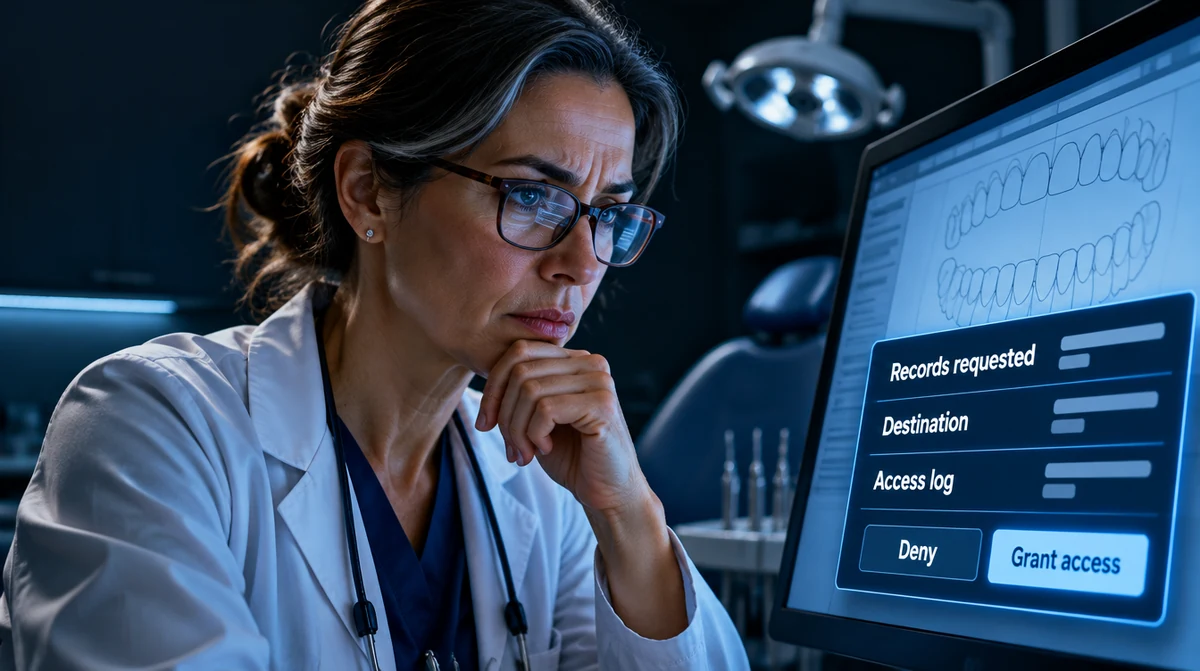
The AI should receive the information required for the approved task rather than unrestricted access by default. A scheduling workflow may need patient identity, appointment history, provider availability, and appointment rules. It may not need the entire clinical note.
The practice should review read and write permissions separately. Reading the schedule is different from creating an appointment. Viewing an insurance status is different from changing the patient record. Each permission should correspond to a defined workflow.
How the system becomes more useful over time
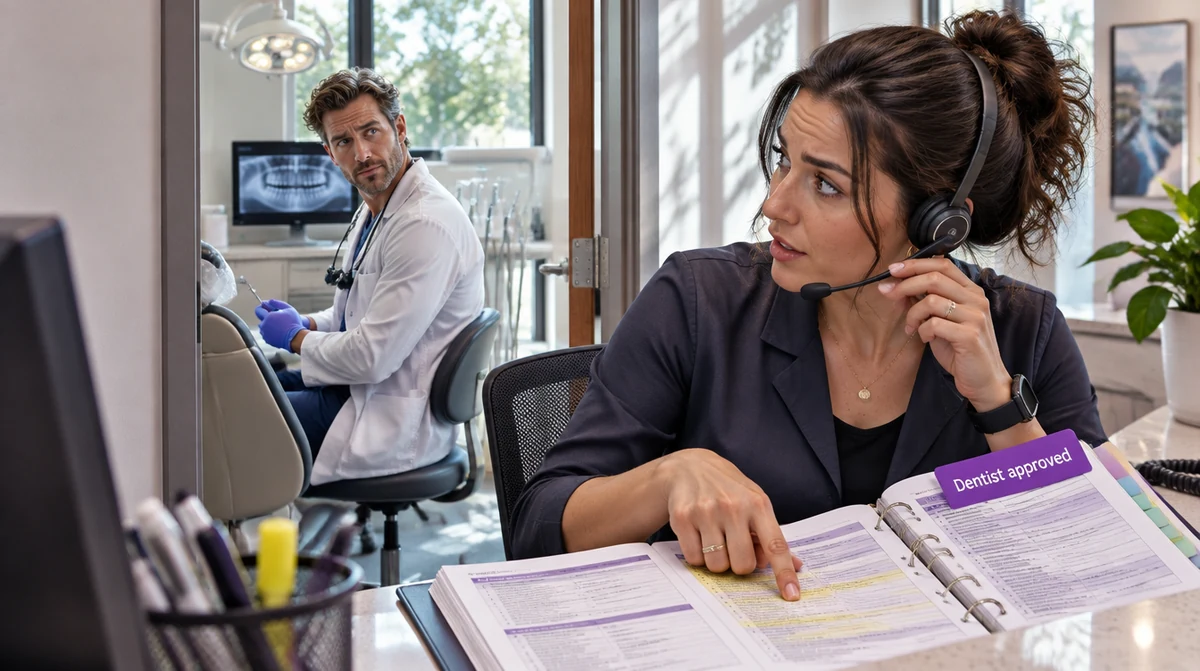
Changes need review. If a conversation exposes a scheduling problem, the team can correct the rule and test it again. I wouldn't want the system quietly changing appointment requirements on its own.
A practice may learn that a certain appointment type needs a longer block, that a provider does not offer a service at one location, or that a recall workflow needs another exclusion. Those findings should become documented configuration changes that the practice can review and test.
Multi-location practices need two levels of configuration
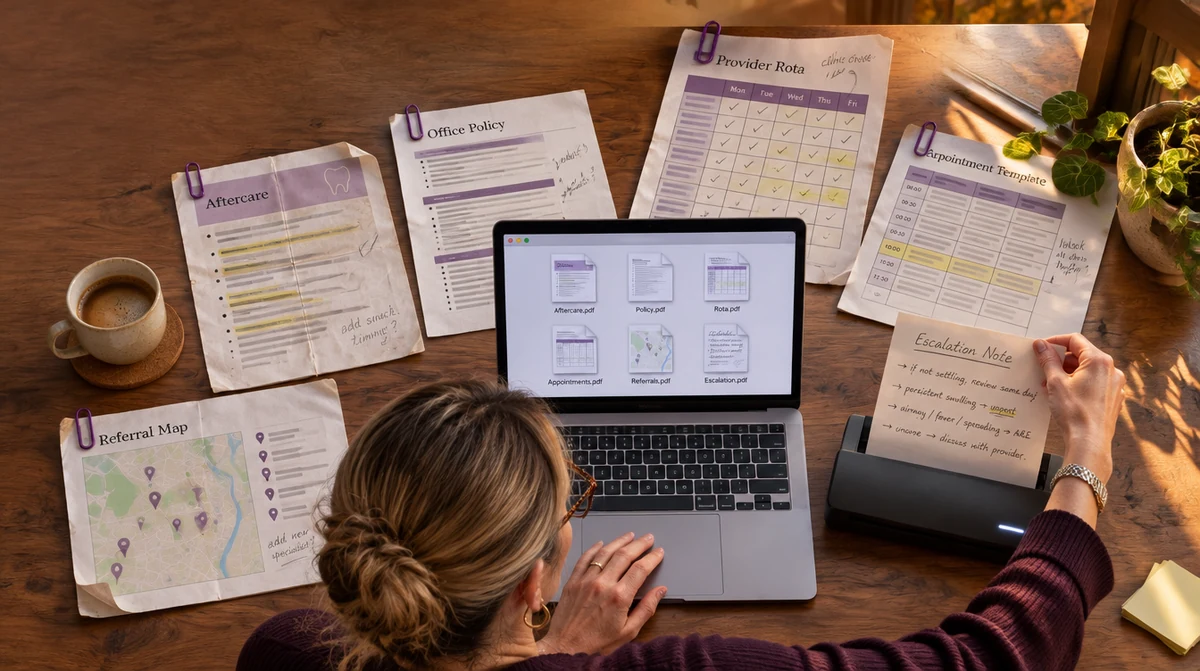
Group practices need common standards and local rules. The organization may establish one policy for identity verification and human escalation. Each location may still have different hours, providers, operatories, services, insurance participation, and scheduling preferences.
A mixed-PMS group adds another layer. One location may use Dentrix Ascend while another uses Open Dental or Denticon. The centralized dashboard should not hide those differences. Implementation should document the connection and available actions for every location.
Can the team rely on the result?
I'd check the connection against everyday work. Does a booked patient stop receiving recall messages? Does a new appointment appear with the correct provider and length? Can staff find the conversation that led to it?
The morning huddle is a useful example of what I'm looking for: information already in the chart reaching the team when they can use it.
Sources and further reading