How many patient calls is your practice missing?
Most dental practices miss 30-40% of inbound calls. See how AI reception can capture every call 24/7.
Patients rarely separate clinical questions from administrative ones. A patient may call to schedule a crown and then ask why the root canal has to happen first. Another may ask why an exam is necessary when nothing hurts. A patient considering an implant may want to understand the healing period before choosing an appointment.
Those questions often reach the front desk first. A well-trained team can answer many of them, but a busy office doesn't always have a dentist available to repeat an explanation. I can see a useful role for AI here.
I want our administrative team to have explanations I've reviewed and feel comfortable having them share with patients. That includes what a procedure involves, how to prepare, and which questions need to come back to us. The patient needs enough understanding to participate in the next step.
The gap between scheduling and understanding
Take the patient calling to schedule a crown. They may remember agreeing to treatment but not why another appointment has to come first. Simply finding an opening won't resolve that question.
"Let me ask the dentist" is sometimes the right answer. But when we've already written a general explanation, I'd like the team — and an AI agent — to be able to use it without starting from scratch.
The same approach can support preoperative and postoperative communication. The agent can use dentist-approved instructions, ask the practice's standard urgency questions, and give the clinical team a more complete summary before an emergency visit. It should not diagnose the problem or reassure away a possible complication.
Answering the question the patient asked
For a patient asking about radiographs, I'd want a simple explanation: they help us see areas we can't see by looking in the mouth alone. That answers the general question. Interpreting that patient's images still belongs with the dentist.
For the crown call, the explanation needs to follow the documented plan. If endodontic treatment comes first, the agent can explain that sequence. It also needs to recognize when a specialist report or the dentist's clearance is still outstanding, rather than promise the crown can be scheduled.
What the agent needs for that conversation
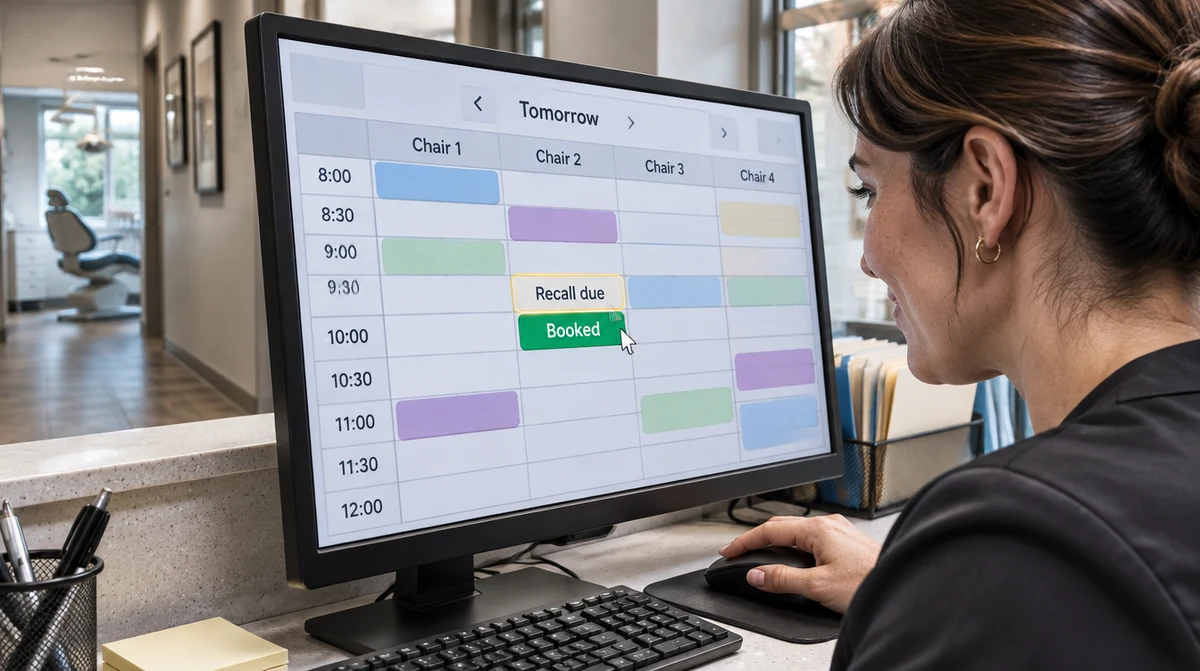
The explanation alone isn't enough. The agent also needs the office's scheduling rules, the right provider and location, and access to the patient's planned treatment and appointments when permitted. Otherwise, it may give a reasonable explanation and still offer the wrong visit.
The AI should not answer from the entire internet
I'd want the explanation to come from materials our practice has chosen and reviewed. A general answer found online may not reflect the instructions we gave that patient.
When the materials leave a question unanswered, the agent needs to bring it back to us. It also needs to distinguish a general explanation from instructions specific to a provider or patient.
Questions the system should be prepared to handle
- Why do I need an exam if nothing hurts?
- Is an examination the same as a cleaning?
- Why do I need radiographs if everything feels fine?
- Why is periodontal maintenance different from a regular cleaning?
- Why does my root canal usually come before my crown?
- Why might I need healing time between an extraction graft and implant?
- Why do I need a consultation before oral or IV sedation?
- How should I prepare before my procedure?
- Which postoperative concerns should be reported to the office?
- What information does the office need before an emergency visit?
Questions that still belong with the dentist
The AI should not decide whether a symptom represents a new diagnosis, whether a treatment plan should change, or whether a patient is medically suitable for a procedure. It should not change a medication, interpret a specialist report, or promise that treatment can proceed before the dentist has reviewed the relevant information.
The transfer needs to be useful. Tell the patient what will happen, send the question and conversation to the right team member, and make the request visible. "Someone will get back to you" isn't enough if no one in the office sees it.
Why location and provider context matter
Clinical services are not always uniform across a group. In a multi-provider office, some dentists may place implants while others restore them. Sedation training and preferences can differ. Insurance participation can also vary by provider.
A useful AI agent should not offer a service simply because the organization provides it somewhere. It should identify the correct location and provider, apply the approved scheduling rules, and confirm the details with the patient.
How the practice should improve the answers
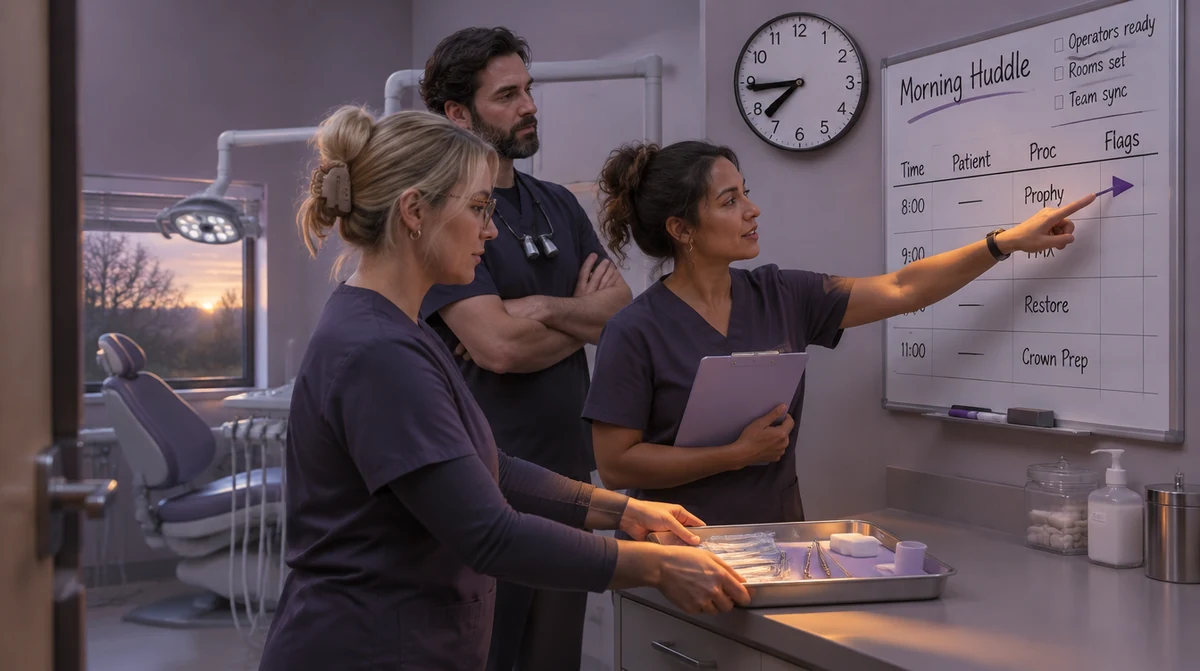
I'd start by reviewing questions the team keeps bringing back to me. If an answer is unclear, we can rewrite it and test it again by phone and text before using it with patients.
- Begin with the questions staff hear most often
- Write a short, dentist-approved answer for each question
- Define when the answer must be transferred to a person
- Test the same question by voice and text
- Review the answer for accuracy, tone, and consistency
- Publish only after the responsible dentist approves the result
Fewer repeated explanations
For that patient calling about a crown, success would mean understanding why another step comes first and knowing whom to contact about an unresolved question. Booking an appointment is only useful if it's the right one.
That's the kind of support I'd want for our front desk: a reliable explanation they can use, with a straightforward way to bring me into the conversation.
Sources and further reading