How many patient calls is your practice missing?
Most dental practices miss 30-40% of inbound calls. See how AI reception can capture every call 24/7.
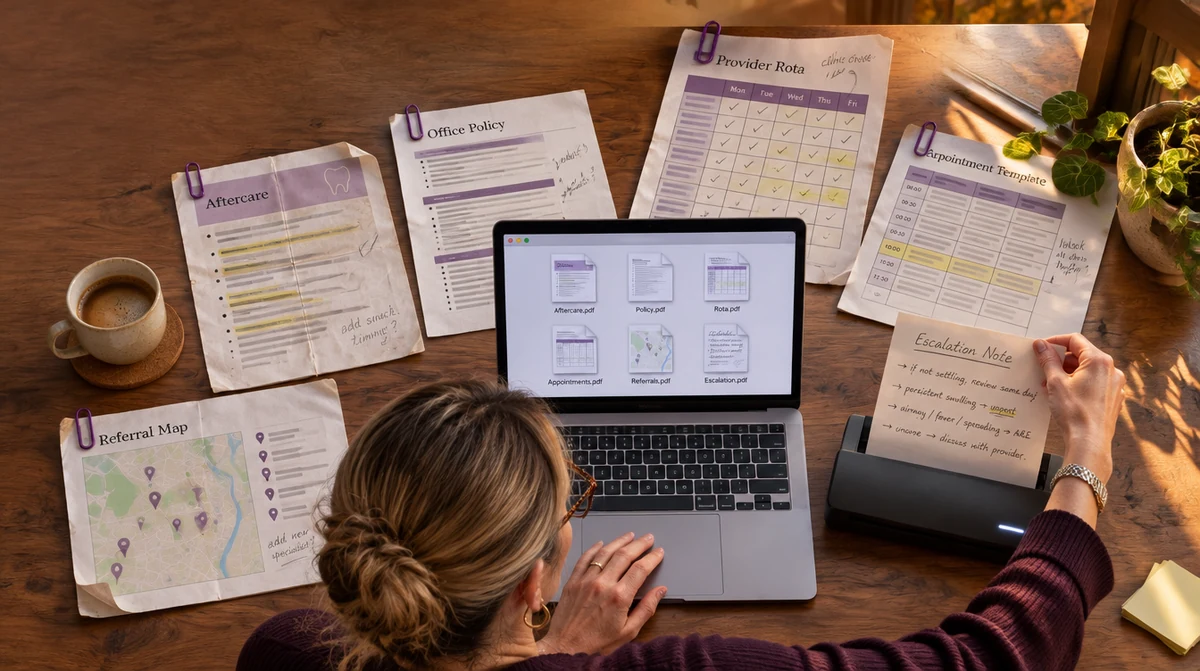
Before an AI agent speaks with our patients, I'd want to gather the materials our team already relies on. Patient handouts, preparation instructions, and scheduling rules say a lot about how the office works.
I'd organize that setup around six areas, then test whether the agent can use each one in a patient conversation.
1. How we explain treatment
Patients ask why they need an exam when nothing hurts, why periodontal maintenance differs from a regular cleaning, and why treatment sometimes takes several visits.
I'd start with the handouts and explanations we already share, then review how the agent uses them. The wording needs to make sense when spoken aloud as well as on a page.
2. Which sources we trust
I'd keep a record of the professional guidance and other evidence-based sources behind our explanations.
Give each document a review date and a person responsible for keeping it current. The team needs to know which version the agent is using.
3. What has to happen before an appointment
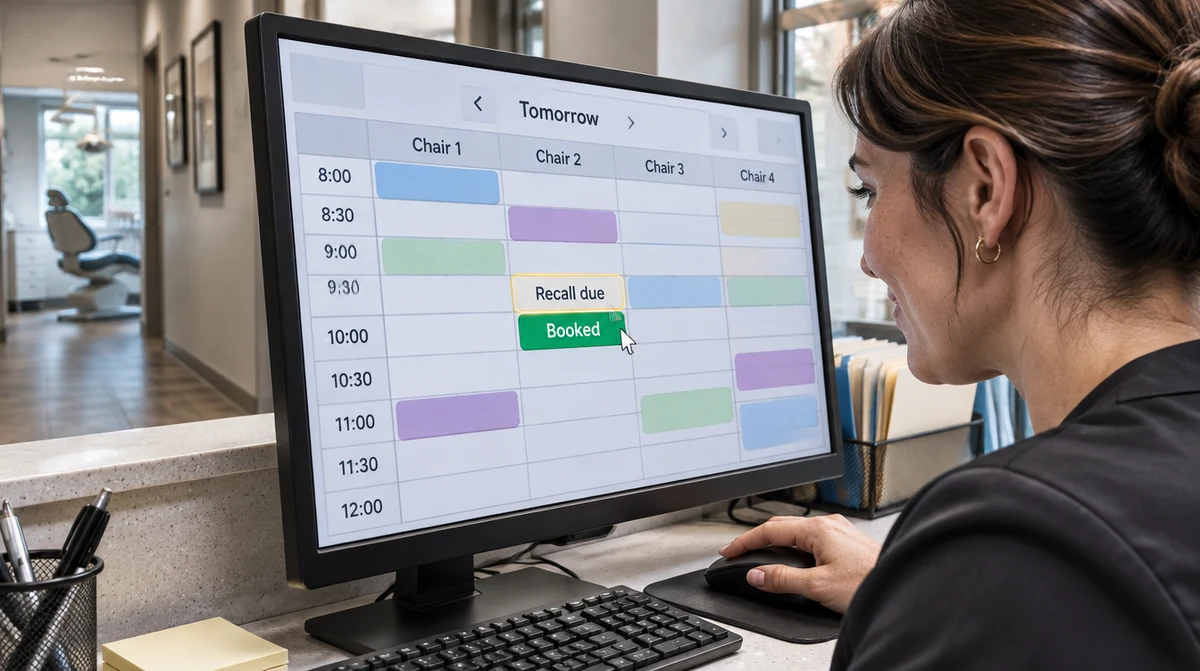
Written scheduling rules need more detail than an appointment name. A consultation may require records first, and a restorative visit may depend on another treatment step or a specialist's report.
I'd put those prerequisites alongside the appointment instructions so the agent knows when it can offer a visit and when to ask the team.
4. Differences between providers and locations
A service offered at one location may not be available at another. Providers may also have different consultation requirements, appointment lengths, or sedation capabilities.
I'd make a simple provider and location reference with those differences spelled out. A service listed on the practice website doesn't establish that every dentist offers it.
5. Our preparation and follow-up instructions
I'd gather the current preoperative and postoperative instructions by procedure, including the contact information patients need if they have a concern.
The clinical team needs to review those materials and specify which questions require a call back or immediate attention. Old instructions should be removed from use when a replacement is approved.
6. When to involve a person
Write down whom the agent contacts when it can't answer, when a patient asks for a person, and when a concern needs clinical attention.
Then test the handoff. Does the request reach the right person with the conversation attached, and does the patient know what to expect?
Test the materials before adding more
I'd begin with a small set of common questions and appointment types. Ask them by phone and text, and have the team check the answers against the materials we supplied.
If an answer is weak, find out whether the source is unclear, missing, or being used incorrectly. That gives us something specific to fix before expanding.