
How many patient calls is your practice missing?
Most dental practices miss 30-40% of inbound calls. See how AI reception can capture every call 24/7.
The AI dental receptionist you can buy today did not exist in 2023. Five years ago there was effectively one major player — TrueLark, founded in 2018 — and its conversations were rule-driven, not truly conversational. Today there are 15+ platforms competing on omnichannel coverage, multilingual support, and mobile-app reach, and the market has already had its first $35 million consolidation. This is the timeline of how the category actually evolved between 2018 and 2026, with the dates, founders, funding rounds, and acquisitions that mattered.
TL;DR: The five turning points of dental AI receptionists
- 2018 — TrueLark founded, the first AI front-desk platform purpose-built for dental and wellness. Pre-LLM; rule-based plus traditional machine learning.
- 2023 — TensorLinks enters the dental AI space, founded by industry veterans from Intel, CVS, and Stanford. Predates the YC W24 cohort by roughly a year.
- January 2024 — Arini launches via Y Combinator's W24 batch (founders Abdul Jamjoom and Rami Rustom), becoming the first widely-recognized generative-AI native dental receptionist.
- May 6, 2025 — Weave Communications acquires TrueLark for $35 million ($25M cash + $10M equity), marking the first major consolidation in the category.
- March 2026 — Weave (with TrueLark inside) receives American Dental Association endorsement, signalling the AI front-desk category has reached "establishment" status.
When did the first AI dental receptionist launch?
The first major AI front-desk platform for dental practices was TrueLark, founded around 2018. TrueLark's first funding round closed June 28, 2018; the company raised $5.95 million across three rounds before being acquired by Weave in 2025. From 2018 through 2023, TrueLark was effectively the only "AI receptionist" purpose-built for the dental and appointment-based services market — and the technology of that era constrained what was possible.
Alongside TrueLark, two adjacent players operated through this window:
- Smith.ai — an AI + human-hybrid answering service serving multiple verticals, including dental.
- Peerlogic — focused on call analytics for dental practices, with AI features for transcription and missed-call follow-up.
None of these used foundation models — they predate the technology. Conversations were rule-driven, intent-classification based, with bounded dialog trees and very limited natural-language understanding compared to what came next.
Why pre-2024 AI dental receptionists hit a ceiling
Pre-2024 AI receptionists could route calls, take messages, transfer to staff, and handle structured booking flows — but they could not truly converse. They struggled with:
- Out-of-script patient questions ("does this insurance cover an apicoectomy?")
- Multilingual calls beyond a few hardcoded language options
- Multi-turn clarification ("which Dr. Patel — the orthodontist or the pediatric one?")
- Handoffs that preserved context from the AI to a human
- Complex appointment-type and provider-rule reasoning
The result was that pre-2024 AI receptionists were positioned as "answering service replacements" — better than voicemail, not equivalent to a skilled human front-desk staffer. The technical ceiling held the category back. Most dental practices that tried AI receptionists in 2020–2023 reverted to humans or hybrid services.
2023: TensorLinks enters the dental AI space
In 2023, TensorLinks entered dental AI, founded by industry veterans from Intel, CVS, and Stanford. The early thesis was that the next wave of foundation models — what would arrive publicly through 2024 — would make a true conversational dental receptionist viable, and that an AI front desk should be omnichannel from day one (voice, SMS, web, email), multilingual by default, and integrate directly with dental practice-management systems rather than sit alongside them.
TensorLinks predates Arini's launch by roughly a year and represents one of the earliest dental-specific entrants of the modern AI generation. The company's mobile app — Tensorlinks Clinic-Assist AI on Google Play — is, as of May 2026, the only native mobile app shipped by an AI dental receptionist platform.
January 2024: When did Arini launch and what made it different?
Arini went through Y Combinator's Winter 2024 (W24) batch, launching publicly through that program in early 2024. The founders are Abdul Jamjoom and Rami Rustom, and the product was an AI dental receptionist built on then-emerging GPT-class voice models. Arini focused heavily on the Dental Service Organization (DSO) market and quickly became the most widely-recognized dental AI receptionist brand on the back of YC's amplification and rapid DSO deployments.
The Arini launch — combined with the public availability of OpenAI's Realtime-class voice APIs and ElevenLabs' improving voice cloning — marked the inflection point. From early 2024 onward, the category was no longer constrained by pre-LLM dialog technology.
2024–2025: The market boom
Between Arini's launch and the Weave acquisition of TrueLark (May 2025), the dental AI receptionist category went from two or three serious players to more than a dozen:
- Dentina — relaunched with modern generative architecture; dental-specific clinical awareness; voice + SMS
- HeyGent — AI receptionist targeting solo and small practices
- Viva AI — founded by dental practice owners, voice-first AI front desk
- Rondah — DSO-focused with portfolio-level analytics
- Resonate AI — missed-call recovery as the central use case
- Savvy Agents — pivoted to a multi-agent "AI workforce" framing (receptionist + scribe + insurance + retention)
- Zaha — launched as the AI receptionist component within mConsent's intake platform
- My AI Front Desk — multi-vertical AI receptionist with a dental segment
The TensorLinks platform expanded through this period as well — adding omnichannel SMS, web chat, and email; scaling language support to 24+ with auto-detection; deepening PMS integration to 15+ systems via NexHealth; and shipping the native mobile app for clinic staff and DSO operators.
May 6, 2025: The first big consolidation — Weave acquires TrueLark
On May 6, 2025, Weave Communications — the all-in-one dental and healthcare communications platform — announced it was acquiring TrueLark for $35 million: $25 million in cash plus $10 million in equity, subject to standard closing adjustments. The deal closed in Q2 2025.
The acquisition combined Weave's category leadership in healthcare communications (VoIP phones, two-way texting, online reviews, payments) with TrueLark's seven years of AI front-desk work and a model trained on more than 10 million conversations. From the acquisition forward, TrueLark's product was repositioned as "Weave AI Receptionist" — one feature inside Weave's broader bundle rather than a standalone AI specialist platform.
The Weave–TrueLark deal was the first major signal that the AI dental receptionist category had matured enough to consolidate. It also created a meaningful market gap: practices that wanted the deepest AI specialist — not bundled with phones, reviews, and payments — now had a clearer reason to choose dedicated platforms like TensorLinks, Arini, or Dentina.
March 2026: ADA endorsement of Weave
In March 2026, Weave (with the integrated TrueLark AI Receptionist) received endorsement from the American Dental Association. The endorsement applied to the Weave platform as a vendor relationship rather than to any specific feature, but it marked a category milestone: AI front desk had moved from "experimental" to "establishment-endorsed" within roughly 24 months of Arini's W24 launch.
May 2026: What the dental AI receptionist market looks like today
As of May 2026, the dental AI receptionist market includes 15–20 actively-marketed platforms, competing on:
- Channel coverage — voice only vs. omnichannel (voice + SMS + web chat + email)
- Language support — single language vs. multilingual with auto-detection
- PMS integration depth — middleware (NexHealth) vs. native partnerships
- Pricing transparency — published pricing (rare) vs. demo-gated quotes (common)
- Mobile reach — web-only vs. native mobile apps for clinic staff
- Verticalization — dental-only specialists vs. multi-vertical AI receptionists with a dental segment
Representative pricing in May 2026: TensorLinks publishes $399, $599, and $799 per location per month tiers with a 30-day free trial. Most competitors (Arini, Rondah, Weave AI, Viva, HeyGent) require a sales demo to disclose pricing. Industry benchmarks remain steady: dental practices miss 30–38% of inbound calls; each missed call is worth $850–$1,300 in first-year revenue (Peerlogic 2026 study, 26 practices); AI follow-up recovers approximately $47,088 per practice per month.
What comes next: predictions for late 2026 and 2027
Three forces will shape the next phase of the category:
- More consolidation. The Weave–TrueLark deal will not be the last. Expect at least one more $20M+ acquisition before the end of 2026 as PMS vendors and large practice-management platforms bring AI receptionist capability in-house.
- Mobile and multi-modal expansion. Native mobile apps for clinic staff (TensorLinks shipped first in 2026) will become table stakes. Expect Arini and the Weave AI Receptionist to follow with iOS and Android by late 2026.
- Differentiation through verticalization. The "AI receptionist" category as a whole will fragment into dental-specific specialists vs. multi-vertical generalists. Practices choosing on PMS depth and dental-specific workflow handling will favor specialists.
Frequently Asked Questions
Who invented the AI dental receptionist?
The first major AI front-desk platform purpose-built for the dental and wellness segment was TrueLark, founded around 2018. It used pre-LLM rule-based and machine-learning approaches. The first generative-AI native dental receptionist that achieved broad recognition was Arini, which launched through Y Combinator's W24 batch in January 2024.
When was Arini founded?
Arini was founded in 2024 by Abdul Jamjoom and Rami Rustom and went through Y Combinator's Winter 2024 (W24) batch. It is a Y Combinator-backed AI dental receptionist focused heavily on the Dental Service Organization (DSO) market.
When was TensorLinks founded?
TensorLinks has been in the dental AI business since 2023, founded by industry veterans from Intel, CVS, and Stanford. It predates Arini's W24 launch by roughly a year and represents one of the earliest dental-specific entrants of the modern AI generation.
How much did Weave pay for TrueLark?
Weave Communications announced its acquisition of TrueLark on May 6, 2025 for a total of $35 million — $25 million in cash plus $10 million in equity, subject to customary closing adjustments. The deal closed in Q2 2025.
Are any pre-2024 AI dental receptionist companies still operating independently?
Yes — Dentina (relaunched on modern architecture), Smith.ai (still operates as AI-human hybrid across multiple verticals), and Peerlogic (still focused on call analytics and missed-call recovery) all continue independently. TrueLark was acquired by Weave in 2025.
What technology change in 2024 unlocked the modern dental AI receptionist?
Two technology shifts converged: (1) OpenAI's Realtime API and GPT-4-class voice models becoming commercially available with low-enough latency for live phone conversation, and (2) ElevenLabs and similar voice-cloning services producing natural-sounding synthetic voices. Combined, these made AI receptionists that sounded human and could hold true conversations economically viable for dental practices for the first time.
Which AI dental receptionist has the most market share in May 2026?
No single platform dominates. Weave AI Receptionist (incorporating TrueLark) has the largest installed base by virtue of Weave's pre-existing dental customer footprint. Arini has the strongest DSO penetration among standalone AI specialists. TensorLinks, Dentina, Rondah, and others occupy meaningful share through differentiation on omnichannel coverage, multilingual support, pricing transparency, and mobile reach.
What is the only AI dental receptionist with a mobile app?
As of May 2026, TensorLinks is the only AI dental receptionist with a native mobile app for clinic staff and DSO operators. The Tensorlinks Clinic-Assist AI app is available on Google Play. No other dental AI receptionist platform shipped a native mobile app before May 2026.
Sources and further reading
- Y Combinator launch — Arini: The AI receptionist for dentists
- Weave press release — Weave Communications to Acquire TrueLark
- Healthcare IT Today (May 2025) — Weave Communications to Acquire TrueLark, Accelerating AI-Powered Front Office Automation
- Dentistry Today (May 2025) — Weave Communications Acquiring AI-Powered Front Office Platform TrueLark
- Best AI Dental Receptionist 2026 — comparison of 11 platforms
- TensorLinks vs Arini comparison
- TensorLinks vs TrueLark (Weave AI) comparison
- TensorLinks vs Weave comparison
- How TensorLinks AI dental receptionist works
Related articles
More from AI Automation on TensorLinks.
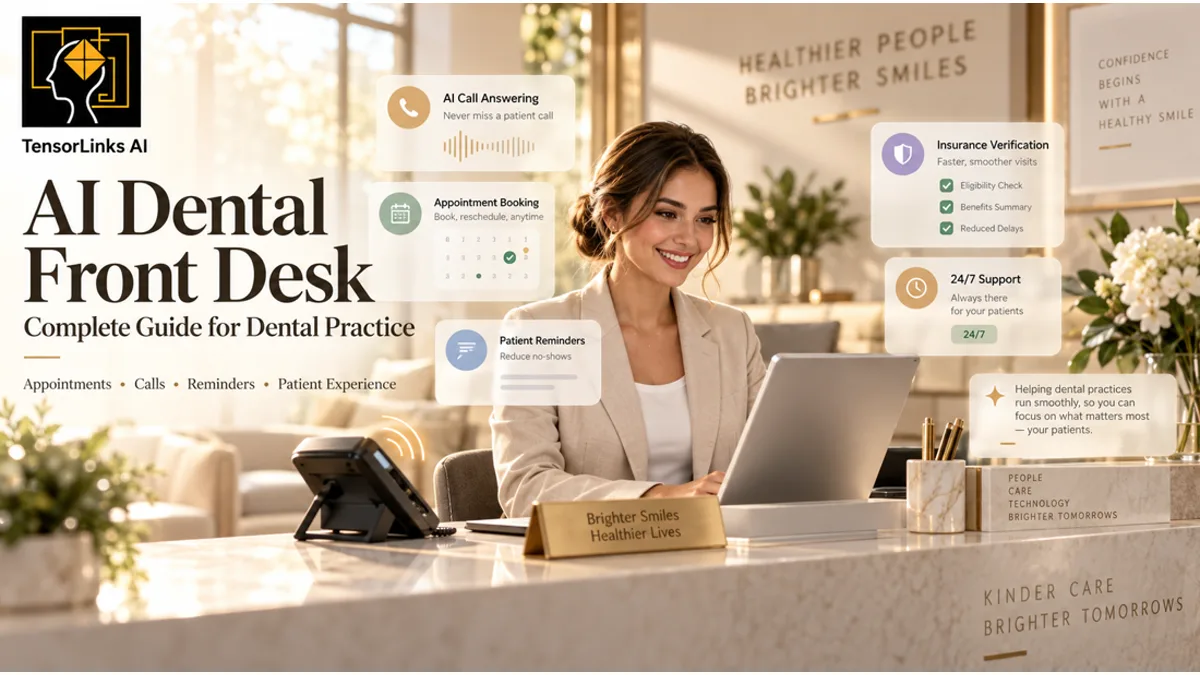
AI Receptionist for Dentists: What Can It Actually Do? | TensorLinks AI
Learn what an AI receptionist for dentists can actually do, from answering calls and booking appointments to reminders, intake, and after-hours patient support.
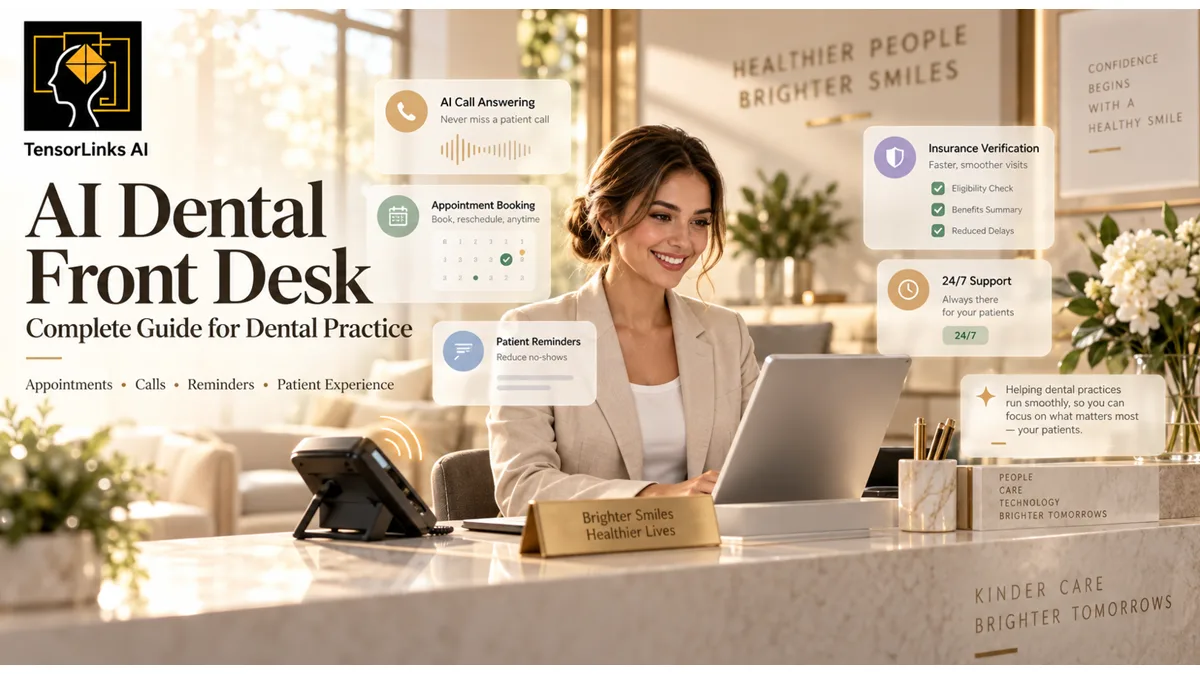
AI Dental Front Desk: Complete Guide | TensorLinks AI
Learn how an AI dental front desk supports calls, scheduling, reminders, and patient communication, plus what to check before choosing a solution.
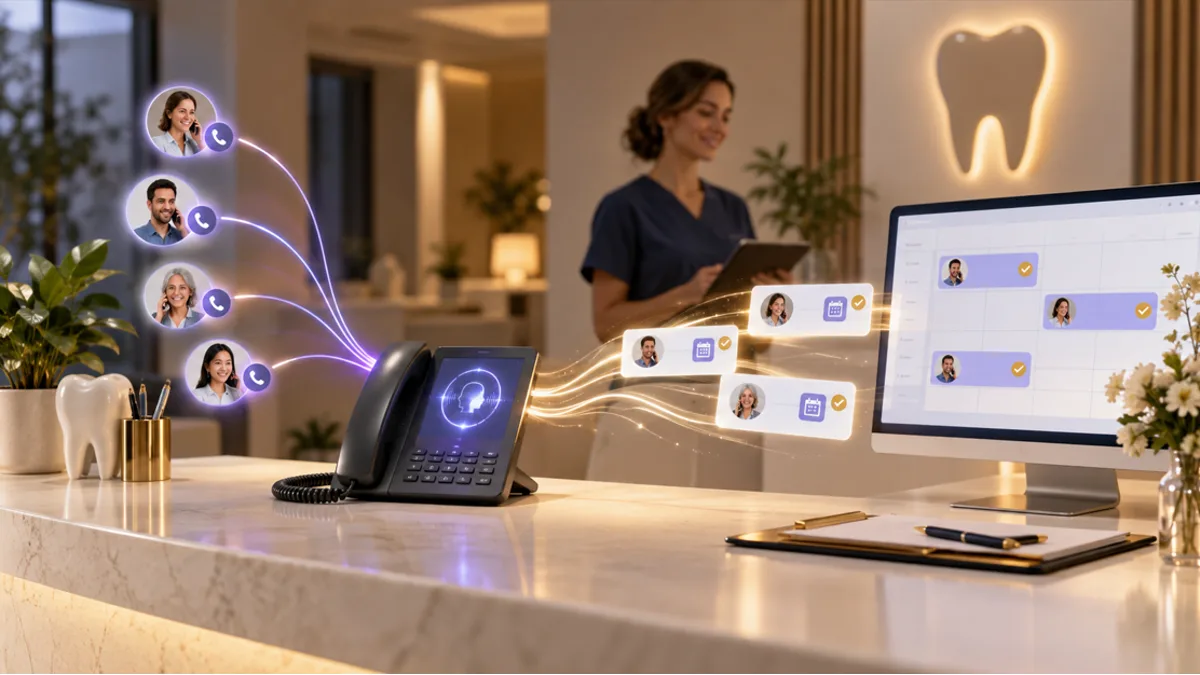
How AI Receptionists Help Dental Practices Stop Missing Calls
Missed-call rates run 30–38% at many dental practices. Learn how an AI dental receptionist provides 24/7 coverage, books appointments automatically, and turns missed calls into scheduled patients.
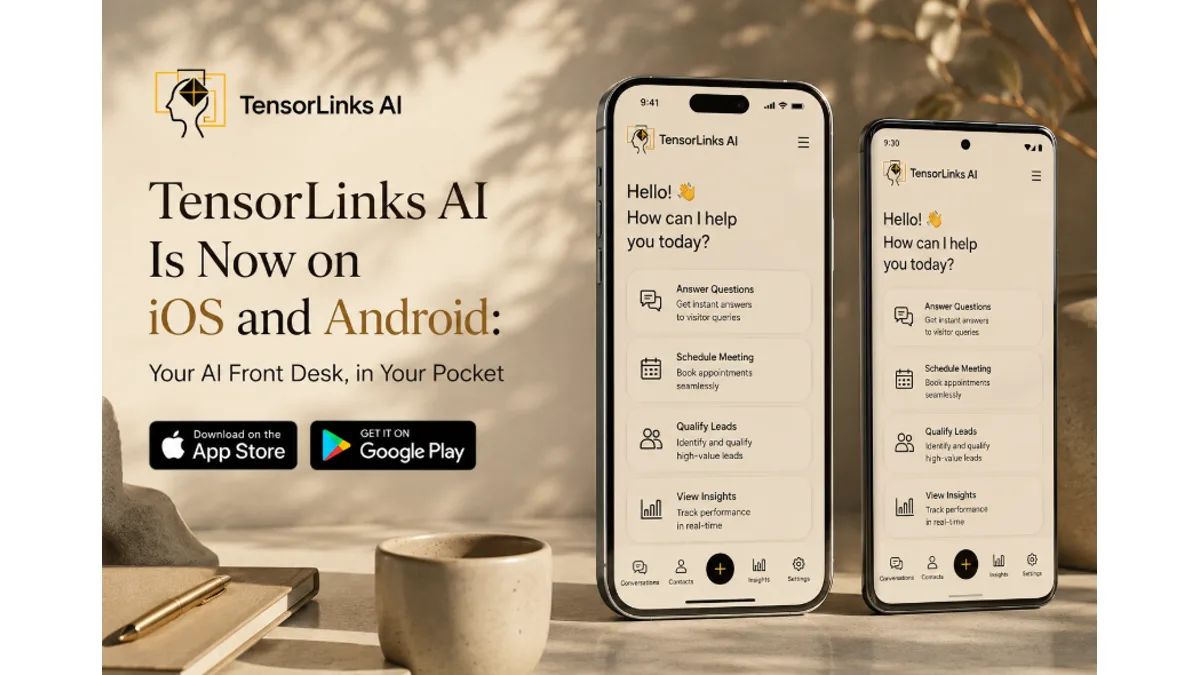
TensorLinks AI Is Now on iOS and Android: Your AI Front Desk, in Your Pocket
TensorLinks AI now runs on your phone. Your AI front desk answers calls and texts 24/7 — and now it reaches you on iOS and Android the moment something needs you. Live calls, patient threads, the schedule, insurance, analytics, and billing, wherever you are standing.
Ready to stop missing patient calls?
TensorLinks AI answers every call 24/7, books appointments into your PMS, and speaks 24+ languages. Join hundreds of dental practices already using AI reception.