How many patient calls is your practice missing?
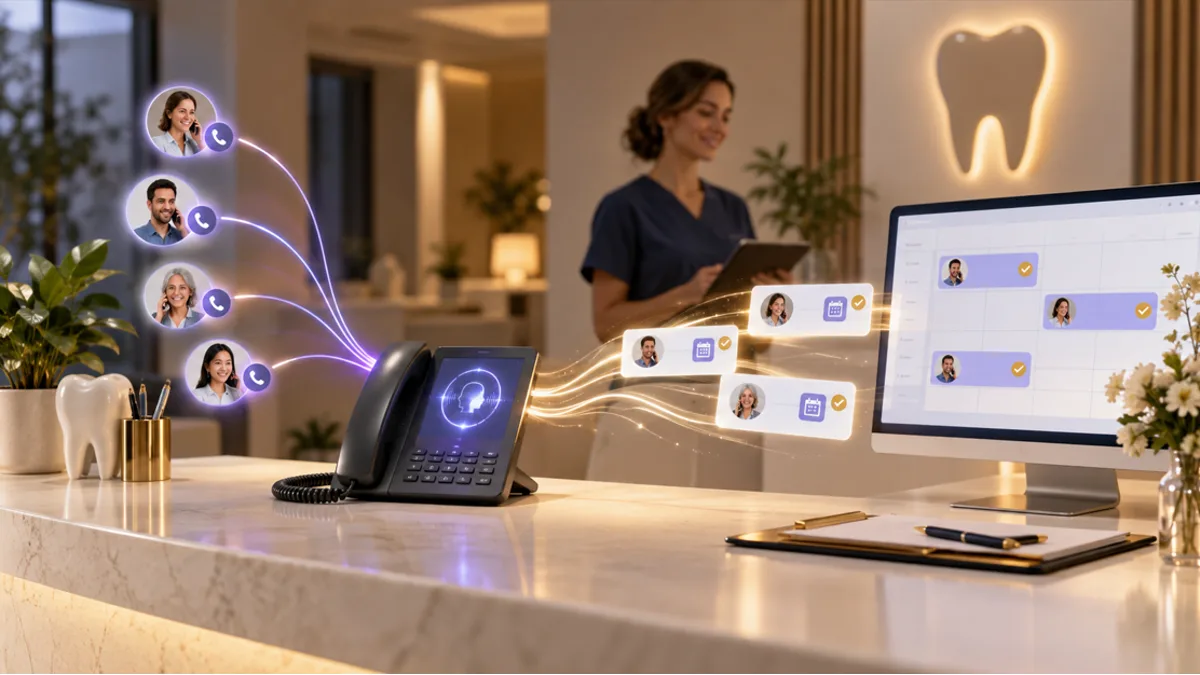
Most dental practices miss 30-40% of inbound calls. See how AI reception can capture every call 24/7.
For Dental Service Organizations managing 10, 50, or 500+ locations, implementing AI front desk technology at scale presents unique challenges and opportunities. This guide provides a proven framework for successful enterprise-wide deployment.
Why DSOs Are Adopting AI Front Desk
DSOs face operational challenges that single practices don't:
- Inconsistent Patient Experience: Each location may handle calls differently
- High Turnover: Front desk staff turnover creates constant training needs
- Limited Visibility: Call performance data scattered across locations
- Scaling Costs: Adding locations means adding headcount
- After-Hours Coverage: Expensive to staff across time zones
AI Front Desk for DSOs solves these challenges with unified, consistent, scalable patient communication across all locations.
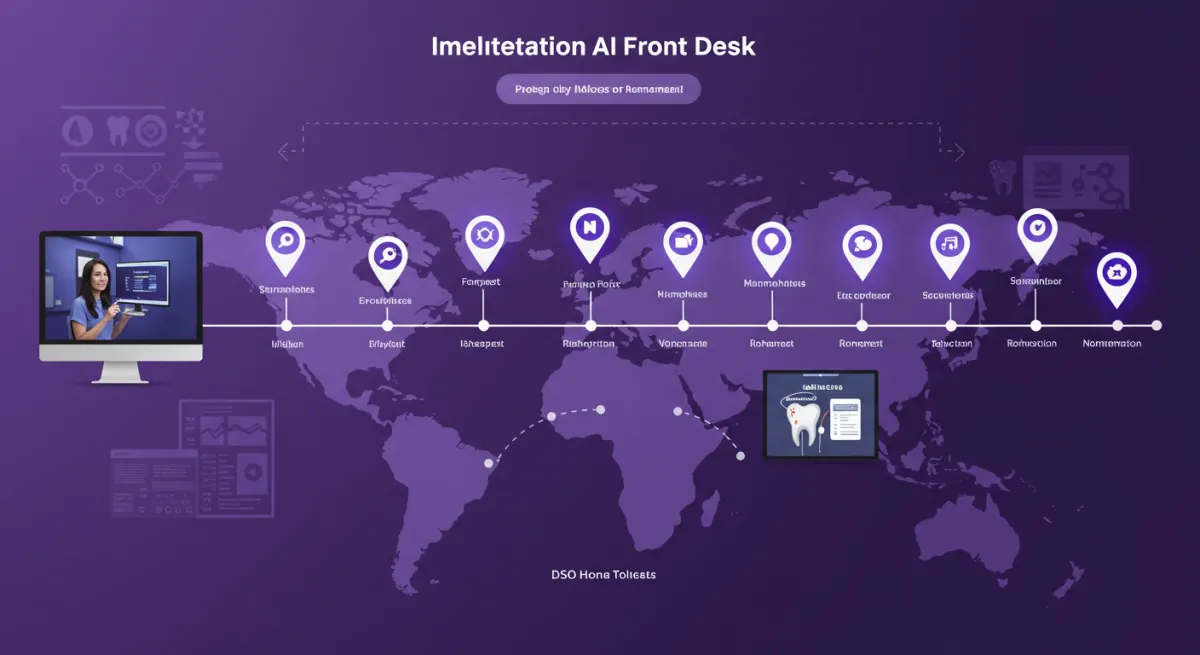
The DSO Implementation Framework
Phase 1: Pilot Program (4-6 Weeks)
Start with 3-5 locations to validate ROI before enterprise rollout:
- Select locations with diverse characteristics (urban/suburban, high/low volume)
- Define success metrics (missed calls, booking rate, patient satisfaction)
- Baseline current performance for comparison
- Train practice managers on the dashboard
- Weekly check-ins with vendor success team
Phase 2: Integration (2-3 Weeks per PMS type)
Connect AI Front Desk to your practice management systems:
- Map all PMS instances across locations
- Prioritize by system type (all Dentrix locations first, then Eaglesoft, etc.)
- Validate scheduling accuracy before going live
- Test provider availability sync
- Configure appointment types per location
Phase 3: Custom Configuration
Balance brand consistency with local flexibility:
- Create master scripts that enforce brand standards
- Allow location-specific customizations (hours, providers, services)
- Set up regional manager access levels
- Configure escalation paths for each location
- Enable multilingual support where needed
Phase 4: Rollout (Phased by Region)
Scale systematically rather than all at once:
- Roll out by region or market for focused support
- Include regional managers in training
- Monitor dashboards daily during first two weeks
- Address issues before moving to next region
- Document learnings for remaining locations
60
Days to full DSO rollout (typical)
40%
Reduced front desk costs
99.9%
Uptime SLA
1
Dashboard for all locations
Common Pitfalls to Avoid
- Skipping the Pilot: Validate before scaling. Every DSO is different.
- Underestimating Change Management: Staff need training and buy-in.
- Ignoring Regional Differences: Patient populations vary by market.
- Rigid Scripts: Allow some customization to maintain local relationships.
- No Success Metrics: Define KPIs upfront to measure ROI.
Measuring DSO-Wide Success
Key metrics to track across all locations:
- Call Answer Rate: Should approach 100% with AI
- Booking Conversion: % of calls that result in appointments
- After-Hours Bookings: Previously missed opportunities
- Patient Satisfaction: Survey scores for AI interactions
- Front Desk Time Saved: Hours redirected to in-office patients
- Cost per Call: Compare to previous answering service costs
DSOs using TensorLinks AI Front Desk report 28% fewer missed calls and 18% more after-hours bookings within 30 days.
Frequently Asked Questions
How long does it take to roll out AI front desk across a DSO?
A typical enterprise rollout takes 60-90 days from pilot to full deployment. The recommended approach is a 4-6 week pilot with 3-5 locations, followed by phased regional expansion. TensorLinks integrates with Dentrix, EagleSoft, Open Dental, and Curve, with each PMS type requiring 2-3 weeks for integration and validation. DSOs that follow a structured pilot-then-expand framework see faster adoption, fewer issues, and measurable ROI within 30 days at each location.
What ROI should a DSO expect from AI front desk technology?
DSOs using AI front desk typically see 28% fewer missed calls, 18% more after-hours bookings, and a 40% reduction in front desk labor costs within the first 30 days. At scale, the ROI compounds: centralized AI eliminates the need for location-by-location answering services, reduces training costs from front desk turnover, and captures revenue from the 47% of patient calls that arrive outside business hours. Most DSOs achieve full payback within 60-90 days of deployment.
How do you maintain brand consistency across DSO locations with AI?
Create master scripts that enforce brand standards — greeting structure, booking workflows, escalation protocols, and compliance language — then allow location-specific customization within defined parameters (local hours, provider availability, services offered, and tone adjustments). TensorLinks supports this hybrid approach with role-based access levels: central operations teams manage core configuration while regional managers adjust location-specific settings. The platform supports 24+ languages, enabling consistent patient experience even across demographically diverse markets.
Tags: AI front desk DSO, DSO technology, multi-location dental, dental service organization, AI receptionist DSO, enterprise dental AI, DSO operations